
The 1841 Society
Legacy Gifting
Leave a Legacy

Honoring the Past
Investing in the Future
In 1841, a group of Episcopalians in Savannah banded together to establish a second parish: “St. John’s Church, in Savannah”.
Goal: To build the church endowment to a level sufficient to fund building and equipment maintenance annually and to contribute to the operating budget. This should allow annual stewardship giving to provide greater funding of present-day ministries and missions.
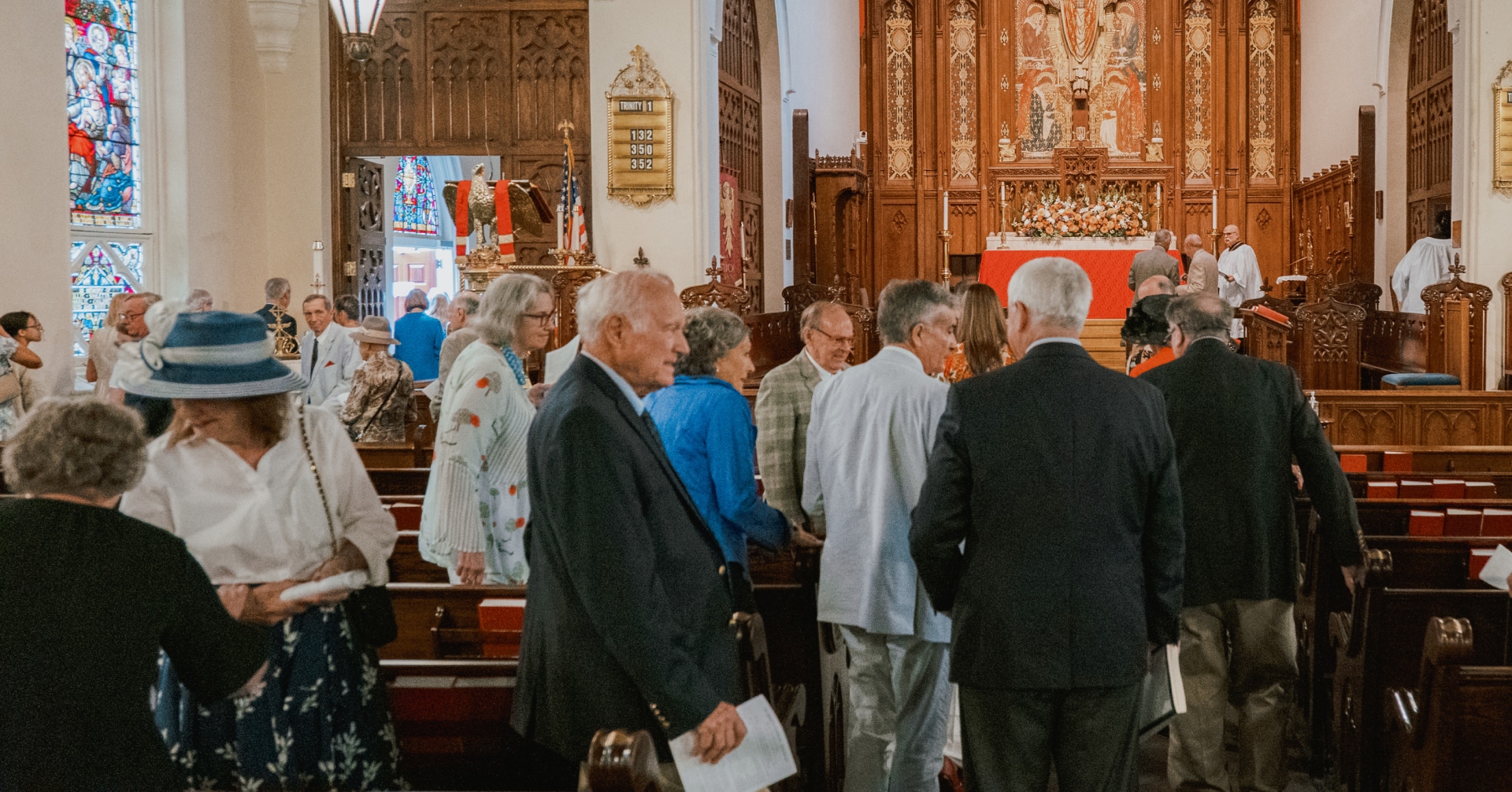
Legacy Gifting Explained
Overview
A legacy gift is a gift of one’s assets for the future benefit of St. John’s Church. These gifts are often planned in conjunction with overall estate planning, and you are encouraged to use professional advisors (legal and accounting) to implement your individual gift plan.
Legacy gifts are usually future or “deferred” gifts and are designed with your lifetime needs in mind. Some gift plans actually distribute income back to you and can at times even increase one’s lifetime income.
While annual gifts are often made from income, legacy gifts typically utilize assets that would otherwise be included in your estate. Donors may consider that their legacy gifts enable them to continue their annual giving to St. John’s Church far beyond their lifetimes.
All members of St. John’s Church who make a planned gift, of any type or size, and who notify the Parish Office in an appropriate manner become members of the 1841 Society. Membership in this donor recognition group allows St. John’s Church to thank and recognize individuals, couples or families for the plans they have made in support of the church’s future. Benefits of membership include invitations to certain special events, recognition in specific publications and on the parish website, special updates about church planning, and an 1841 Society pin. We hope that donors will allow their names to be listed in this membership, thereby encouraging others to become 1841 Society members.
After first providing for their heirs, legacy gift donors direct estate assets to organizations that are meaningful to them. (This is in lieu of otherwise “directing” these assets to the government in the form of taxes.) These gifted assets are not subject to estate taxes, and gifts made during life may also generate valuable current income tax deductions. Where appreciated property (such as stock or real estate) is gifted, capital gains taxes may be avoided as well.
There are a variety of gifting strategies that offer flexibility in making tax-wise legacy gifts to St. John’s Church. A legacy gift can be made during your lifetime or through your will. Gifted assets may include cash, securities, retirement plan assets, life insurance policies and real estate.
You do not need to consider yourself wealthy to make a legacy gift that is of great value to you and to the future of St. John’s Church. Examples of common legacy gifts are described below.
Gift Types
Bequests
Short Description: A bequest is the most common type of legacy gift. Simply put, it is “remembering the church in your will,” and allows the donor to direct certain of his or her assets, which could otherwise be subject to estate taxes, to the church.
Your will, or codicil to your will, should name “St. John’s Church, in Savannah” in one of the following ways:
- General Bequest – usually a stated sum of money, i.e., “I give $____ to St. John’s Church, in Savannah.”
- Specific Bequest – a gift of specific item or items, such as particular securities real estate, i.e., “I give 1,000 shares of Coca-Cola Company stock to St. John’s Church, in Savannah” or “I give my home at 100 Fellowship Way, Savannah, GA 31401 to St. John’s Church, in Savannah.”
- Contingent Bequest – a gift which is executed subject to a prior condition being met, i.e., “Provided that Sarah is not then living, I give $____ to St. John’s Church, in Savannah.”
- Residuary Bequest – a gift of all, or a portion of, the “rest, residue and remainder” of your estate after all other bequests, debts and taxes have been paid, i.e., “I give 40% of the rest, residue and remainder of my estate to St. John’s Church, in Savannah.” (You may prefer to divide your estate according to percentages of the residue, rather than specifying dollar amounts, to ensure that your beneficiaries receive the proportions you desire.)
Charitable Lead Trusts
Features of a Charitable Lead Trust:
- Your gift cash, stock or other assets to the charitable trust will generate a current income tax deduction (based on the value of the future gift to the church).
- The entire value of the trust is excluded from your taxable estate.
- Tax-free diversification of the assets which are placed in the trust (the trust pays no capital gains tax on the sale of trust assets).
- Flexibility in determining the payout amount (must be at least 5%).
- An Annuity Trust twill pay a fixed annual income amount, while a Unitrust will pay a fixed percentage of the trust assets as valued annually.
- Income paid to the donor is taxed “according to the nature of its origin,” usually a combination of ordinary income, capital gains and return of capital.
- Income will be paid to you, you and your spouse, or other named beneficiary for life (or for a specified number of years).
- Offers flexibility in how the trust assets are managed (can be managed and administered by the donor, his or her personal advisor, or a designated financial institution).
Charitable Gift Annuities
Short Description: A charitable remainder trust is an individually managed trust that will pay you either a designated fixed dollar amount or a fixed percentage of the trust’s assets for life. After your lifetime, the trust remainder will go to the church.
Features of a Charitable Remainder Trust:
- Your gift cash, stock or other assets to the charitable trust will generate a current income tax deduction (based on the value of the future gift to the church).
- The entire value of the trust is excluded from your taxable estate.
- Tax-free diversification of the assets which are placed in the trust (the trust pays no capital gains tax on the sale of trust assets).
- Flexibility in determining the payout amount (must be at least 5%).
- An Annuity Trust twill pay a fixed annual income amount, while a Unitrust will pay a fixed percentage of the trust assets as valued annually.
- Income paid to the donor is taxed “according to the nature of its origin,” usually a combination of ordinary income, capital gains and return of capital.
- Income will be paid to you, you and your spouse, or other named beneficiary for life (or for a specified number of years).
- Offers flexibility in how the trust assets are managed (can be managed and administered by the donor, his or her personal advisor, or a designated financial institution).
Charitable Remainder Trust
Short Description: A charitable remainder trust is an individually managed trust that will pay you either a designated fixed dollar amount or a fixed percentage of the trust’s assets for life. After your lifetime, the trust remainder will go to the church.
Features of a Charitable Remainder Trust:
- Your gift cash, stock or other assets to the charitable trust will generate a current income tax deduction (based on the value of the future gift to the church).
- The entire value of the trust is excluded from your taxable estate.
- Tax-free diversification of the assets which are placed in the trust (the trust pays no capital gains tax on the sale of trust assets).
- Flexibility in determining the payout amount (must be at least 5%).
- An Annuity Trust twill pay a fixed annual income amount, while a Unitrust will pay a fixed percentage of the trust assets as valued annually.
- Income paid to the donor is taxed “according to the nature of its origin,” usually a combination of ordinary income, capital gains and return of capital.
- Income will be paid to you, you and your spouse, or other named beneficiary for life (or for a specified number of years).
- Offers flexibility in how the trust assets are managed (can be managed and administered by the donor, his or her personal advisor, or a designated financial institution).
Retirement Plan Assets, Life Insurance & Real Estate
Short Description: Certain assets lend themselves particularly well to charitable gifting. This may be because taxes can be avoided, because the power of leverage can significantly enhance the gift or because tax advantages can be generated without disruption to the donor’s lifestyle. Below are three asset types that, when used in legacy gifting, meet this description.
Features of Gifting Retirement Plan Assets:
- IRAs and qualified retirement plans such as 401 (k) and pension plans are subject to multiple layers of taxation (both income and estate taxes) often leaving little value to heirs.
- This “double-taxation,” up to 70% or more, can be avoided by making a gift of retirement plan assets to St. John’s Church, either as a direct or a contingent beneficiary.
- The accounts may either be gifted to the church (during lifetime or in your will), or the church may be named the beneficiary of the retirement plan.
Features of Gifting Life Insurance:
- Gifting a life insurance policy to St. John’s Church is a way to make a “leveraged” legacy gift—by making small premium payments each year, you ultimately make a gift of sizeable proportions.
- A new or existing life insurance policy can be gifted. The church should be named as the policy owner and its beneficiary.
Features of Gifting Real Estate:
- Real estate has grown tremendously in value over time. If left in your estate, property can be subject to large estate taxes.
- Donors can gift their residence, farm, or vacation home and retain lifetime use of the property. The donor will receive a current tax deduction based on the remainder value of the property, which will pass to the church after his or her life.
Frequently Asked Questions
Giving Online Securely with Access ACS™
Legacy gifts are usually future or “deferred” gifts and are designed with your lifetime needs in mind. Some gift plans actually distribute income back to you and can at times even increase one’s lifetime income. Gift types include bequests, trusts, annuities and real estate.
- Learn more: Legacy Gifting
- Learn more: The 1841 Society
Access ACS™ is a secure site that is supported by ACS Technologies. They are the largest developer of Church management software in the industry. To ensure your data is 100% secure and protected, they utilize the most up-to-date security technology available. Read their Privacy Policy and Terms of Service.
You and authorized administrative staff will be the only people that have access to information about your giving record. Neither church officers, nor the pastoral staff, have access to this information.
Keep in mind that giving records can lag behind a week or two during certain busy times of the year. Please allow at least two weeks for your record to be updated from any given date. If there is still concern that an item is not showing on your record after this two week period, please contact Janice Woods @ 912-232-1251.
Only registered users have access to contact information via their password. No one else on the internet can see your information. Users MUST be in our membership database before they are given a password. Contact Janice Woods at 912.232.1251 to begin the process.
Click the link “Forgot your password or user name?” We can only view your username, we cannot access your password.
Yes. First, login to Access ACS™. Then, go to the “My Personal Preferences” page and select “Change My Password.” Your new password will take effect immediately.
Yes. Please feel free to save the Access ACS™ page to your favorites list in your web browser for easy access.
- Login in your Access ACS™ account
- Go to the “My Complete Profile” tab in Access ACS™
- Click on the “Pencil Icon,” or choose “Edit” in the upper right hand corner
- After you update your record, then click “Submit“
Completing the steps outlined above will generate a change request to the Church secretary, and once she reviews it your record will be updated. These updates are normally approved within one week.
For questions, comments, and concerns about Access ACS™ please contact Janice Woods @ 912-232-1251
